
What Is a Tariff? The Plain-English Explanation
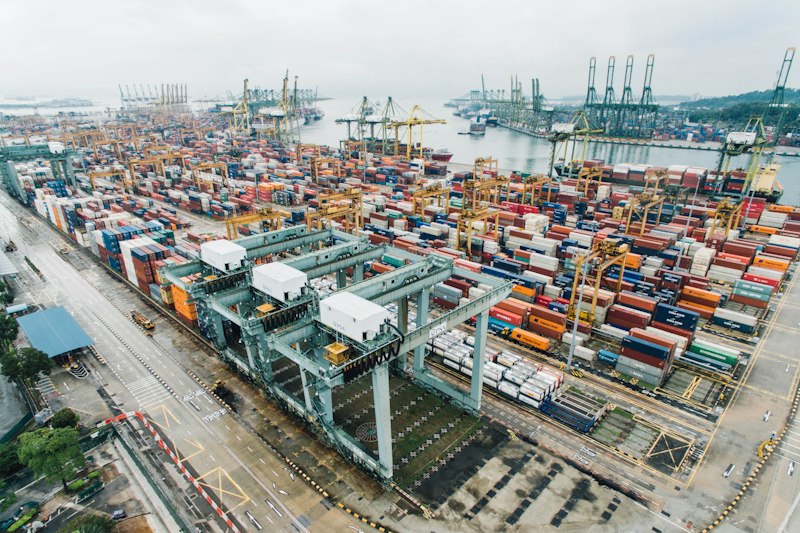
A tariff is a tax imposed by a government on goods imported from another country. When a company imports a product, it must pay the tariff to the government of the importing country before the goods can be sold domestically.
Tariffs are one of the oldest tools of economic policy — they predate income taxes, value-added taxes, and most modern forms of government revenue collection. Today they serve primarily as instruments of trade policy rather than revenue generation.
How Tariffs Work: A Simple Example
Suppose the United States imports steel from a foreign country at $500 per ton. If the US government imposes a 25% tariff on imported steel, importers must now pay $625 per ton ($500 + $125 tariff). That additional cost typically gets passed on to buyers — so a car manufacturer buying imported steel now pays more for the raw material, which may eventually result in higher car prices for consumers.
This is the core mechanism: tariffs raise the price of imported goods, making them more expensive relative to domestically produced alternatives. The intended effect is to encourage consumers and businesses to buy domestic products instead.
Why Governments Use Tariffs
1. Protecting Domestic Industries ("Protectionism")
The most common rationale. By making imports more expensive, tariffs give domestic producers a price advantage. A domestic steel mill that costs $550 per ton to operate is uncompetitive against $500 imported steel — but becomes competitive if imports are taxed to $625.
2. Revenue Generation
Historically, tariffs were a government's primary income source. In early American history, import duties funded the majority of the federal government's operations for over a century.
3. National Security
Some industries — steel, semiconductors, pharmaceuticals — are considered essential for national defense. Tariffs are used to ensure domestic production capacity exists, so the country isn't dependent on foreign sources in a crisis.
4. Retaliation and Trade Leverage
Tariffs are powerful negotiating tools. A country might impose tariffs to pressure a trading partner to change specific policies — then remove them as part of a negotiated agreement.
5. Correcting Trade Imbalances
When one country exports far more to another than it imports ("trade surplus"), tariffs are sometimes used to try to rebalance the relationship, though economists debate how effective this is.
Types of Tariffs
| Type | How It Works | Example |
|---|---|---|
| Ad valorem | A percentage of the product's value | 25% on imported steel |
| Specific tariff | A fixed dollar amount per unit | $0.50 per kilogram of sugar |
| Compound tariff | Combination of both | 10% + $0.20 per liter |
| Revenue tariff | Primarily to raise government income | Low tariffs on rarely-domestically-produced goods |
| Protective tariff | Primarily to protect domestic industry | High tariffs on goods that compete with domestic production |
| Retaliatory tariff | Imposed in response to another country's tariffs | Country A taxes Country B's exports after B taxes A's |
The Debate: Do Tariffs Work?
Tariffs are one of the most debated topics in economics. The honest answer is: it depends on what you define as "working."
The Case For Tariffs
Protecting jobs: Tariffs can prevent import competition from destroying domestic industries and the jobs they support. A factory that would close under free-trade competition may stay open — and keep workers employed — behind tariff protection.
Infant industry protection: New industries may need time to develop before they can compete globally. Temporary tariffs give them breathing room to grow, improve efficiency, and eventually compete on their own terms. South Korea and Japan used this strategy extensively in their post-war industrial development.
Strategic industries: For semiconductors, medical supplies, and defense materials, having domestic production capacity is worth the economic inefficiency of tariff protection.
The Case Against Tariffs
Higher prices for consumers: Tariffs are ultimately paid by domestic consumers and businesses, not by foreign countries. A tariff on imported washing machines raises washing machine prices for everyone in the importing country.
Retaliation and trade wars: When one country imposes tariffs, trading partners typically retaliate with their own tariffs. This leads to trade wars that harm both economies — exporters in both countries lose market access.
Economic inefficiency: Economists generally argue that free trade allows each country to specialize in what it produces most efficiently, lowering overall costs globally. Tariffs distort this by artificially protecting inefficient domestic production.
Harm to downstream industries: A tariff protecting steelmakers raises costs for every industry that uses steel — automakers, construction, appliance manufacturers. Jobs saved in steel may be offset by jobs lost in these downstream sectors.
Major Tariff Disputes in Recent History
US-China Trade War (2018–Present)
Beginning in 2018, the United States imposed broad tariffs on Chinese imports — initially targeting steel and aluminum, then expanding to hundreds of billions of dollars of goods. China retaliated with tariffs on American agricultural exports. The dispute reshaped global supply chains and is a defining feature of the current trade landscape in 2026.
US Steel and Aluminum Tariffs (Section 232)
Invoked on national security grounds, these tariffs affected imports from the EU, Canada, Mexico, and numerous other allies — triggering retaliatory tariffs and significant diplomatic friction before partial resolutions were reached.
Brexit Trade Adjustments
The UK's exit from the EU single market created new tariff and non-tariff barriers on UK-EU trade, affecting supply chains, food imports, and manufacturing across Europe.
Tariffs in 2026: The Current Landscape
The tariff environment in 2026 is more complex and contested than at any point in the post-WWII era. Key developments include:
- Ongoing US-China tariffs: Most tariffs from the 2018–2019 escalation remain in place, with periodic adjustments and new sector-specific additions
- Supply chain reshoring incentives: Multiple countries are combining tariffs on foreign goods with domestic production subsidies to rebuild strategic manufacturing capacity — semiconductors, batteries, pharmaceuticals, and clean energy equipment
- Digital trade tensions: New debates are emerging around tariffs on digital services, data localization requirements, and the taxation of large technology companies operating across borders
- Climate-related trade measures: The EU's Carbon Border Adjustment Mechanism (CBAM) — effectively a tariff on imports from countries with weaker carbon pricing — is reshaping energy-intensive trade flows
How Tariffs Affect You as a Consumer
The impact of tariffs on everyday consumers is real but often indirect:
- Consumer electronics: Tariffs on components from China have contributed to higher prices for smartphones, laptops, and other devices
- Clothing and footwear: Most clothing imported from Asia carries tariffs that are factored into retail prices
- Food prices: Tariffs on agricultural imports affect prices at the grocery store, particularly for items like dairy, sugar, and meat
- Washing machines and appliances: A 2018 study found that US tariffs on washing machines raised appliance prices noticeably for consumers
The key insight: tariffs are not paid by foreign governments or foreign companies — they are paid by domestic importers and passed on to domestic consumers. Understanding this changes how you read political rhetoric about trade policy.
Conclusion
Tariffs are simultaneously simpler and more complex than most public discussion suggests. At their core, they're just taxes on imports. Their effects, however, ripple through entire economies — affecting prices, jobs, international relationships, and long-term industrial development.
In 2026, understanding tariffs is essential for making sense of economic news, business strategy, and political decisions that affect prices, employment, and geopolitical relationships around the world.